New UK study finds widespread hidden sensory loss

One in four over-50s has vision impairment and three quarters have some hearing loss

Groundbreaking research involving eye tests and hearing examinations with more than 500 over-50’s – the first of its kind in the UK – has revealed widespread and largely undetected sensory health issues, prompting urgent calls for funding for a wider study into the nation’s eye health and hearing.

The pilot UK National Eye Health and Hearing Study (UKNEHS) found that a quarter of adults aged 50 and over had vision impairment in at least one eye, 76% had hearing loss and 81% of participants had never undergone a hearing test. Researchers also found that 36% of people had undiagnosed glaucoma.

 The study, which took place earlier this year, first tested vision and hearing loss among residents of care homes. In the second phase, people over the age of 50 in randomly selected postcodes across Cambridgeshire and Peterborough were invited to be tested.

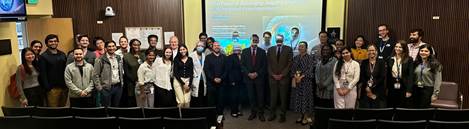
.At an event in London on October 10, sensory loss charities, policy makers and researchers discussed the findings and launched a campaign for the study to be extended across the UK. The researchers are calling for full support and funding from all four UK governments.

 Rupert Bourne, Professor of Ophthalmology at Anglia Ruskin University (ARU) and principal investigator of the study, said: “These figures are deeply concerning. They show that sensory health is being overlooked, even among high-risk groups. We are missing critical opportunities to prevent avoidable sight and hearing loss.”

 Professor Bourne added: “This lack of data means we are unable to measure the true scale of unmet need or evaluate the effectiveness of existing services. This is not just a data gap – it is a public health infrastructure gap. The UK National Eye Health and Hearing Study aims to provide the baseline data needed to shape more effective, targeted, and equitable health and social care services.”

It was covered in The Guardian:

https://www.theguardian.com/politics/2025/oct/10/millions-of-older-britons-likely-to-have-undiagnosed-sensory-problems-study-finds

… and a film was made of the study- this is the QR code to it… or view at: UK NEHS: UK national eye-health and hearing study on Vimeo

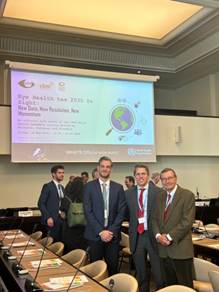
World Forum for Uncorrected Refractive Error

The World Forum for Uncorrected Refractive Error is a global convening of policymakers, industry leaders, health professionals, and advocates dedicated to closing the vision gap and ensuring universal access to vision care by 2030.

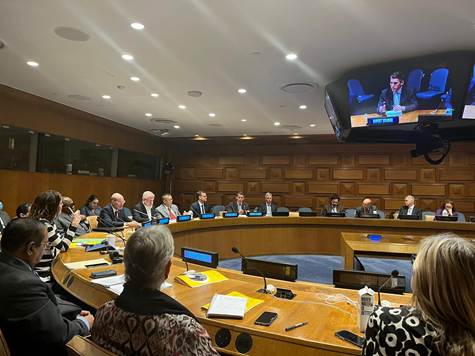
Professor Rupert Bourne was an invited panellist for “The Case for Better Data in Vision Care” which addressed the indispensable role of robust data in securing resources and shaping effective vision care strategies.

78th World Health Assembly, Geneva

The World Health Organization (WHO), in collaboration with the Vision Loss Expert Group, has released new data showing that millions still suffer from preventable vision loss due to uncorrected refractive errors that could be addressed with simple, cost-effective interventions like eyeglasses. “In 2024, WHO included effective refractive error coverage in its monitoring framework for the 14th General Programme of Work, a clear signal that the world is beginning to recognize the critical importance of accessible, high-quality vision care,” said Professor Rupert Bourne, Principal Investigator from the Vision Loss Expert Group.

“Data from over 815 000 people across 76 countries shows that we are off track. Urgent global action is needed to reach the goal of a 40%

https://www.who.int/news/item/22-05-2025-millions-lack-access-to-basic-eyeglasses increase in eyeglasses coverage by 2030” added Professor Bourne.

Johns Hopkins Aziz Memorial Lecture

Prof Bourne was invited to Johns Hopkins where he spoke to the residents on the subject of diagnostics in the detection of glaucoma and later gave the Aziz Memorial Lecture, speaking on the subject of “The Power of Geography- mapping progress in tackling global vision impairment”

Vision Excellence Award for contribution to WHO/IAPB VISION2020 program

Professor Rupert Bourne was awarded the Vision Excellence award to recognise outstanding contributions to eye health during the twenty years of VISION 2020.

The citation was summarized as follows:

Professor Bourne’s leadership of the Vision Loss Expert Group (VLEG) throughout VISION 2020 has raised awareness of the prevalence of eye diseases globally and has provided a consistent starting point for health agencies (e.g. WHO, UN), governments and international charities to compare, plan, justify and monitor eye-health interventions.

https://www.iapb.org/connect/members/vision-excellence-awards/vision-excellence-awards-rupert-bourne

UK-Wide Ophthalmology Clinical Research Strategy launched

Ophthalmology is a rapidly growing research area in the UK recruiting 10-15,000 patients to research trials annually and involving most NHS Trusts. Ophthalmology has the largest demand on outpatient departments in the country and this is increasing.

The UK-wide Ophthalmology Clinical Research Strategy will help tailor research to meet this demand, exploring the areas of unmet need in the population and facilitating a non-commercial and commercial ‘research pipeline’ of therapies and technologies, which should encourage more coordinated funding streams.

The Strategy is managed by an Executive Board which is chaired by Professor Rupert Bourne, NIHR Clinical Research Network National Specialty Lead for Ophthalmology.

Read More at https://www.nihr.ac.uk/documents/uk-wide-ophthalmology-clinical-research-strategy/24497?postdiaryentryid=76960

Global Vision Database Funding

The Global Vision Database has been funded for another 5 years

https://www.iapb.org/news/global-vision-database-project-funded-for-5-years/

Recently generous funding by Brien Holden Vision Institute, Fondation Théa, Fred Hollows Foundation, Heidelberg University, Sightsavers, and Lions Club International Foundation has meant the group can continue its activities to maintain the Global Vision Database and provide global updates on prevalence of vision loss.

The Vision Loss Expert Group, an international collaboration of more than 100 ophthalmologists and optometrists with an interest in ophthalmic epidemiology, published the global, regional and country estimates for vision loss by cause for 2010 and then for 2015 with a forecast to 2020 in The Lancet Global Health and the British Journal of Ophthalmology. A collaboration with The International Agency for Prevention of Blindness meant that these data became available to any internet user by accessing the maps of the Vision Atlas (atlas.iapb.org). Now over a decade old, the group continues to work closely with The Global Burden of Disease Study team as the reference group for vision loss.

Immediate plans are for a release of new estimates of vision loss prevalence by cause in 2020 but the project will also focus on risk factors for vision loss and modelling of its impact and the tracking of emerging causes such as myopic macular degeneration.

Professor Rupert Bourne, coordinator for the project said “I am delighted to see the support from eye care organisations for the group’s work. The renewed funding will allow us to continue providing robust and reliable data on the global prevalence and causes of blindness and vision impairment”.

Cambridge Eye Research Centre (CERC) Launch

The Cambridge Eye Research Centre was launched publicly on 22 January at Addenbrookes Hospital.

The wide range of technologically innovative research studies were displayed to patients, staff and invited guests that included Dame Mary Archer who gave the opening address and Michele Acton, Chief Executive of Fight for Sight, who closed the meeting.

Prof Bourne directs CERC and further information about its activities can be found at: https://www.cuh.nhs.uk/addenbrookes-hospital/services/cambridge-eye-research-centre

Marie-Curie Fellow Grant

Rupert Bourne awarded a Marie-Curie Fellow grant from the European Commission

This grant is supporting Professor Nicolas Leveziel from University of Poitiers to work with Prof Bourne’s epidemiology group at Anglia Ruskin University to analyse vision loss data across Europe.